

How to Find Motivation to Exercise When You Don’t Feel Like It
Motivation is the difference between knowing exercise matters and actually doing it.
With only about one in four adults meeting recommended physical activity guidelines, understanding what drives consistent movement has never been more valuable.
This article explores intrinsic and extrinsic motivation, SMART goal setting, habit stacking, accountability, progress tracking, and practical ways to overcome setbacks—so you can build an exercise routine that genuinely lasts.
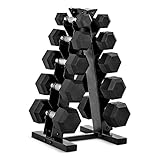
- COMPLETE 150LB DUMBBELL SET WITH RACK – Includes a pair of 5-pound, 10-pound, 15-pound, 20-pound, and 25-pound rubber hex dumbbells with a vertical dumbbell rack.
- RUBBER HEX DUMBBELLS FOR DURABILITY & STABILITY – Rubber-coated hex weights help protect floors, reduce noise, and resist wear, while the anti-roll design adds safety and stability during workouts
- COMPACT SPACE-SAVING STORAGE RACK – A-Frame weight rack with vertical design keeps your free weights organized, off the floor, and within reach—ideal for home gyms, garages, and apartments.
- KNURLED STEEL HANDLES FOR SECURE GRIP – Textured handles provide control and comfort during workouts
- STRENGTH TRAINING WITH FREE WEIGHTS – Perfect for curls, presses, rows, lunges, squats, and more—this dumbbell set supports a wide range of exercises for beginners and experienced athletes.

Last update on 2026-11-23 / Affiliate links / Images from Amazon Product Advertising API
Understanding Motivation
Only 23% of adults meet the CDC’s physical activity guidelines, and the gap is rarely about knowing what to do. It’s about motivation that lasts past week two.
Most people can recite the health benefits of exercise without hesitation. They know it supports weight loss, strength, endurance, and mental health.
The problem is not information. It is workout adherence, the quiet failure point where good exercise intention meets a busy week and quietly disappears.
Solving that problem means looking at two things.
First, where motivation actually comes from, since some drivers last and others fade fast.
Second, the specific barriers to exercise that push people back toward a sedentary lifestyle, even when they genuinely want to change.
This section sets that context before any strategies appear.
Understanding the source of drive, and the obstacles that test it, helps the practical advice later in this guide land properly.
Intrinsic vs. Extrinsic Drivers
Self-determination theory (Deci & Ryan, 2000) identifies three needs, autonomy, competence, and relatedness, that predict whether exercise motivation survives month three.
When a workout feels chosen rather than forced, when you feel you are getting better at it, and when others are involved, the drive tends to hold.
Intrinsic motivation comes from inside the activity itself. You exercise because it feels good, because endorphins lift your mood, or because a hard session clears stress and raises your energy for the rest of the day.
Extrinsic rewards sit outside the activity: a number on the scale, a fitness tracker streak, praise from a workout buddy, or a promised treat after a run.
Both can work at first. The trouble is that external rewards can crowd out internal drive over time.
A meta-analysis by Deci, Koestner, and Ryan (1999) found that tangible rewards for an activity people already enjoy can undermine intrinsic motivation—an effect known as overjustification.
| Driver | Example | Sustainability |
|---|---|---|
| Intrinsic | Enjoying the endorphin rush after a run, feeling calmer after lifting | Strong long-term |
| Extrinsic | Hitting a weight goal, earning praise from a friend | Useful short-term |
| Mixed | Training for a 5K race with a friend | Moderate to strong |
A practical move is to pair an extrinsic goal with an intrinsic anchor. Sign up for a 5K race, then make every training run a social hour with a friend.
The goal gets you out the door early, and the enjoyment keeps you coming back after the race.
Common Barriers and Excuses
The top three reported barriers, “no time,” “too tired,” and “too expensive,” account for roughly 60% of excuses in fitness adherence surveys, yet each has a testable counter.
The point is not to scold yourself for using them.
Name the real cause behind each excuse and answer it with one concrete fix.
- “No time.” The underlying cause is usually an unscheduled day, not a truly empty calendar. Fix: use the ten-minute rule, commit to just ten minutes and stop if you want, and block workouts like meetings so they get the same protection as any other appointment.
- “Too tired.” This often confuses physical fatigue with mental fatigue. A short walk raises energy levels rather than draining them, and a 2017 University of Georgia meta-analysis found that low-to-moderate activity can reduce fatigue. Fix: treat a ten-minute walk as the test, then decide whether to continue.
- “Too expensive.” Gyms and gear can add up, but cost is rarely the true blocker. Fix: bodyweight routines and free workout channels on video platforms deliver solid sessions at no cost.
- “Intimidated at the gym.” Low self-efficacy, not laziness, drives this one. Fix: train during off-peak hours, or start at home with resistance bands and a set of dumbbells for under $100.
Notice that each counter is small and specific. That is deliberate. Lowering a barrier beats summoning willpower, and small wins build the self-efficacy that makes the next session easier to start.

- 【MAKE DAILY CARDIO EASIER WITH THE ORIGINAL STEPPER】 Bring more movement into your routine with the Sunny Original Stepper, a compact mini-stepper designed for convenient at-home cardio with 2 included resistance bands for added upper-body training.
- 【ADJUST STEP HEIGHT TO CHANGE WORKOUT INTENSITY】 Turn the adjustment knob to customize your stepping range. Choose a lower step for a shorter range of motion or increase the height for deeper, more demanding steps as your workout progresses.
- 【DUAL HYDRAULICS FOR SMOOTH, CONTROLLED STEPPING】 Dual hydraulic cylinders provide smooth, controlled intensity with each step, helping you maintain a comfortable, consistent rhythm through quick sessions or longer cardio workouts.
- 【2 RESISTANCE BANDS ADD UPPER-BODY TRAINING】 Use the 2 included resistance bands for curls, presses, raises, rows, and other upper-body movements while you step. Adjust the band length to change tension and add more variety to your routine.
- 【COMPACT FOOTPRINT FOR SMALL SPACES & EASY STORAGE】 With an approximately 15.7″ x 12.4″ footprint and 15.2 lb design, the stepper is easy to fit into bedrooms, living areas, offices, and other smaller spaces, then move or store when you are finished.
Last update on 2026-11-23 / Affiliate links / Images from Amazon Product Advertising API
Setting Realistic Goals
Research on the ‘intention-behavior gap’ shows that 50% of people who intend to exercise fail to follow through. That gap is not a character flaw. It is a planning problem.
Vague aims like “get in shape” or “exercise more” give your brain nothing to act on. They have no start time, no clear action, and no finish line, so the intention to exercise quietly fades into the demands of daily life.
Goal structure closes the gap, not willpower. A well-built goal tells you exactly what to do, when to do it, and how you will know it is working.
The SMART framework is the practical fix. It turns a fuzzy wish into a defined behavior with a review date, which is exactly what behavior change research suggests people need to follow through.
SMART Goal Framework
A SMART goal like ‘walk 20 minutes, 3 days a week, for the next 4 weeks’ outperforms ‘get fit’ because it specifies behavior, frequency, and a review date.
Each letter in the framework removes one source of vagueness.
Here is how each element works with a fitness-specific example:
- Specific: Say “run 5K” rather than “get in shape.” A clear action replaces a general wish.
- Measurable: Track progress with a fitness tracker or exercise app so you can see distance, pace, or sessions completed.
- Achievable: Increase weekly mileage by about 10 percent, not by doubling it. Stretch without breaking.
- Relevant: Tie the goal to something that matters, such as more energy levels or better health outcomes.
- Time-bound: Set a date, like an 8-week target, so the goal has a deadline and a built-in review point.
Compare how the same ambition looks before and after applying the framework:
| Vague Goal | SMART Version |
|---|---|
| Get in shape | Run 5K without stopping within 8 weeks |
| Exercise more | Walk 20 minutes, 3 days a week, for 4 weeks |
| Get stronger | Do 3 strength sessions weekly, adding one rep per set each week |
| Be healthier | Complete 10,000 steps on 5 days per week for a month |
A Couch-to-5K plan shows progressive milestones in action. Week one might be short run-walk intervals, week four longer running blocks, and week eight a continuous 5K.
Each step is small enough to feel doable, which builds self-efficacy and keeps workout adherence steady.
One common mistake is chasing outcome goals like losing 20 pounds instead of process goals like going to the gym three times a week. Outcomes depend on many factors you cannot fully control, while process goals are entirely within your reach.
Focus on the behavior, track it honestly, and let the results follow.
Building Sustainable Habits
A 2010 University College London study found habits take a median of 66 days to form, not the widely cited 21, which changes how you should design your routine.
That longer timeline means you should plan for patience rather than expecting instant change.
In the long run, habit formation carries workout adherence far more reliably than raw exercise motivation. Motivation rises and falls with mood, energy, and stress, but a well-built habit keeps you moving when willpower is low.
This section shows how to make exercise automatic through two practical tools: habit stacking and carefully chosen triggers. The mechanics of each are covered in the next section.
Treat the first two months as a construction phase for your fitness goals. Small, repeatable actions done consistently will do more for long-term adherence than occasional bursts of enthusiasm.
Habit Stacking and Triggers
Habit stacking anchors a new behavior to an existing one: “After I pour my morning coffee, I do 10 push-ups” ties exercise to a reliable daily cue.
This approach rests on the cue-routine-reward loop, a pattern popularized by Charles Duhigg, in which a trigger prompts a behavior that delivers a payoff.
BJ Fogg’s Tiny Habits method and James Clear’s Atomic Habits build on the same idea: start small and attach the new action to something you already do without thinking.
Three concrete stacks to try:
- After brushing your teeth, do 20 squats.
- After parking the car, walk for 10 minutes.
- After dinner, stretch for 5 minutes.
Environment design makes these triggers easier to follow. Lay out gym clothes the night before, keep dumbbells visible in the living room, and place running shoes by the door.
Convenience lowers the barrier to physical activity and supports consistency.
To design your own trigger, try this three-step exercise:
- List three daily routines you never skip, such as making coffee or locking the front door.
- Pick the most consistent one and attach a small exercise action to it.
- State the pairing aloud as “After I [existing habit], I will [exercise action].”
A common mistake is stacking onto an inconsistent habit, like a weekend routine or an irregular commute. Anchor instead to something stable, and celebrate each small win to reinforce the loop.

Creating Accountability
In behavioral studies, people who exercise with a partner report 20-30% higher adherence. Accountability turns intention into action on days when motivation runs out.
Social support works because it changes the math of skipping. When someone is expecting you, canceling carries a real social cost, and that cost often outweighs the pull of the couch.
Research on exercise intention consistently shows that people who plan to exercise still fall short without some external structure holding them to it.
This makes accountability a bridge between fitness goals and actual behavior. It does not replace intrinsic motivation, but it carries you through the gaps while intrinsic motivation builds.
The next section breaks down the main accountability structures and what each one costs you in money and effort.
Social Support and Workout Partners
A scheduled 7 a.m. run with a friend is a commitment device. The social cost of canceling outweighs the urge to hit snooze, and that dynamic alone explains why workout partners work so well for long-term adherence.
Four common accountability structures each have trade-offs. A workout buddy is free and highly effective, but it depends on the other person’s reliability.
A personal trainer offers the highest level of accountability, though sessions typically run $40 to $100 each.
Group fitness classes build community into the schedule, usually at $20 to $40 per class.
Online accountability groups and apps add tracking and sometimes financial stakes, but the commitment is only as strong as your own follow-through.
| Type | Cost | Accountability Level | Best For |
|---|---|---|---|
| Workout buddy | Free | High, depends on reliability | People who respond to social obligation |
| Personal trainer | $40 to $100 per session | Highest | Beginners or anyone rebuilding a routine |
| Group fitness classes | $20 to $40 per class | Moderate to high | People motivated by community and energy |
| Online groups and apps | Free to low cost | Moderate | Self-directed exercisers who like data |
Whichever structure you choose, lock it in with a recurring calendar invite and adopt a no-cancel rule. Treat the session like a work meeting you can’t move.
If you must miss it, reschedule on the spot rather than leaving the next date open. That small habit protects the routine when motivation slumps.
Tracking Progress
A 2015 study in the Journal of Medical Internet Research found that wearable users increased physical activity by about 27% over 12 weeks.
Tracking makes progress visible and reinforces self-efficacy—the belief that your effort produces results.
That belief matters for exercise motivation. When you can see a run logged or a week of workouts checked off, you have concrete proof that your exercise intention is turning into action.
Visible progress feeds intrinsic motivation, which keeps you going far longer than a burst of willpower ever will.
The key is choosing a tracking tool that fits your budget and your fitness goals, then using it lightly rather than obsessively.
The table below compares common options.
| Tool | Price | Best For | Key Metric |
|---|---|---|---|
| Fitbit | From about $100 | Everyday step and activity tracking | Daily steps and active minutes |
| Apple Watch | From about $249 | All-round health and workout data | Activity rings and heart rate |
| Strava | Free, or $11.99/mo | Runners and cyclists who like community | Distance, pace, and segments |
| MyFitnessPal | Free, or $19.99/mo | Linking food and exercise habits | Calories logged and workouts recorded |
| Paper journal | Free | Simple, screen-free accountability | Days per week you exercised |
Notice that every option in the table can track the same core thing: whether you showed up.
That metric matters most for habit formation.
What you track shapes what you chase. Many people fixate on outcomes like weight or pace, then feel demoralized when those numbers move slowly.
Consistency is the better target: how many days per week did you complete a workout?
Try tracking a small set of behaviors:
- Days per week of physical activity, aiming for a realistic count rather than perfection
- Minutes of movement, or steps if you prefer a simpler number
- How you felt after each session, rated from low to high energy and mood
- One small win per week, such as adding a new exercise or finishing a full session
Mood and energy notes are easy to overlook, but they connect exercise to the endorphins and stress reduction you actually feel.
Over time, that record becomes a persuasive argument for lacing up again.
Tracking can also backfire. When every workout becomes a data point to optimize, some people get fixated, checking numbers constantly and feeling anxious on rest days.
Others quit entirely after one missed log because it breaks their streak.
Watch for these warning signs:
- Guilt or dread when you skip a session or forget to log it
- Compulsive checking of stats, even during recovery or rest days
- Letting the tracker override how your body actually feels
- All-or-nothing thinking, where an imperfect week feels like failure
If any of these sound familiar, simplify. Drop to one metric, hide the app for a week, or switch to a paper journal that stays closed until your weekly review.
The tool should serve your motivation, not become another source of pressure.
A short weekly review keeps tracking useful without letting it dominate. Set aside five minutes, ideally the same day each week, and ask three questions: what worked, what got in the way, and what will I adjust next week?
This ritual supports behavior change in a low-pressure way. It turns scattered logs into a simple story of incremental progress, and it gives you a natural moment to celebrate small wins.
Pair it with a brief look at your schedule so you can plan around known barriers to exercise.
Keep the review kind. Self-compassion during a motivation slump protects long-term adherence far better than harsh self-criticism, and it keeps tracking a source of encouragement rather than obligation.

- Pilates Exercise is Everywhere: Do you want to have a perfect hip? Do you want to have an enviable and impressive figure? This professional pilates bar kit with resistance bands allows you to achieve twice the result with half the effort, it can offer more targeted and challenging squat training approaches. you can just toss it in the storage bag and take it everywhere. It is not just a glute workout equipment, but also a silent companion for pursuing a healthy lifestyle
- Multifunctional Pilates Equipment:With the resistance bands and Pilates bar, it offers a full body workout that can be customized to suit individual fitness levels and preferences. And this glute workout equipment can work together with home gym fitness equipment such as exercise bands, pilates ball, pilates reformer, pilates mat, pilates ring, hip training machine and physical therapy equipment to achieve excellent squat workout results
- Adjustable Resistance Bands Workout Equipment:Our multifunctional pilates bar comes with adjustable resistance bands, allowing you to customize the length according to your height. You’ll receive a pair of 30lb and a pair of 40lb bands, giving you the flexibility to use them individually or combine them for up to 70lb of resistance. Whether focusing on exercise her Hip, Arms, back, abdomen, glute, etc, or improving flexibility and squat training, this glute workout equipment delivers help.
- Softer and Safer:Our pilates bar sticks are wrapped in comfortable and non slip foam pads, providing a softer grip and preventing slipping caused by sweat. The screw in assembly method ensures safety by avoiding finger pinching accidents. Stay focused on your workout without any worries
- Perfect Replacement for Traditional Exercise Equipment:Whether you’re someone who exercises regularly or someone who just wants to add a bit of exercise to your daily routine this pilates bar kit a great workout option. it’s very light and portable, Can perfectly replace bulky dumbbell sets, They have the same function as resistance bands, yoga sets, etc., and can perfectly replace large exercise equipment such as rowing machines, pulley systems, squat rack and squat machine for women
Last update on 2026-11-23 / Affiliate links / Images from Amazon Product Advertising API
Rewards and Celebrations
Reward yourself for behavior, not outcomes: ‘I hit 3 workouts this week’ deserves a celebration, while ‘I lost a pound’ is a result you don’t fully control.
This distinction matters because you can repeat behavior on purpose, while outcomes depend on many factors beyond your effort.
The idea traces back to positive reinforcement: behaviors followed by a pleasant consequence tend to happen again. Psychologist B.F. Skinner showed that immediate, consistent rewards shape behavior far more reliably than punishment or nagging.
Applied to exercise motivation, this means pairing your workouts with something you genuinely enjoy so the brain starts linking physical activity with a good feeling.
There is an important caveat, though. Self-determination theory suggests that relying too heavily on extrinsic rewards can crowd out intrinsic motivation—the internal drive that keeps you moving when nobody is handing out prizes.
If every session must earn a treat, skipping the treat can feel like skipping the workout. Use rewards as a bridge to habit formation, not as the only reason you show up.
The practical answer is to keep rewards small, varied, and tied to the process rather than the scale.
Low-cost ideas work best because they are easy to repeat and don’t create pressure to “earn back” money you spent.
- A fresh workout playlist or podcast episode reserved only for training sessions
- A modest monthly subscription to a fitness app that supports progress tracking
- A massage or long bath after four consistent weeks of training
- A new piece of small equipment, like resistance bands, after a milestone
- An afternoon completely free of chores, protected on the calendar
Gamification can supply steady dopamine hits without costing much. Segment leaderboards, smartwatch activity badges, streak counters, and habit-building apps turn exercise into a light game.
Competition through a fitness community or an accountability group adds social support, which research suggests strengthens workout adherence over time.
A simple rule of thumb keeps the rewards system healthy. Reward the process weekly, celebrate milestones monthly, and avoid food-based rewards that create unhealthy associations between exercise and eating.
That structure supports long-term adherence without turning every workout into a transaction.
Overcoming Slumps and Setbacks
The “what-the-hell effect,” abandoning a whole plan after one missed workout, is one of the biggest predictors of exercise dropout, and it’s fixable with a lapse plan.
A single skipped session can feel like proof you lack discipline, so you quit entirely. In reality, lapses are a normal part of long-term workout adherence, not a sign that you should stop.
Most people who struggle with consistency are not battling laziness. They are caught in predictable setback patterns that repeat every few weeks or months.
Recognizing each pattern and having a ready response protects your exercise intention when motivation dips.
Below are four common setback patterns, the fix for each, and a simple recovery protocol you can copy and use the next time things slip.
All-or-nothing thinking. This is the belief that a workout only counts if it is long, hard, or perfect. One busy day becomes a lost week, then a lost month.
The fix is the never-miss-twice rule: if you skip a session, your only job is to make the very next one happen, even if it is shorter or easier than planned.
Burnout and overtraining. Pushing hard every day without recovery drains energy levels and makes exercise feel like a chore.
Experts, including the American College of Sports Medicine, recommend scheduling one to two rest days per week and periodic lighter “deload” weeks. Rest is part of training, not a break from it.
Seasonal or life slumps. Holidays, heavy work periods, and dark winter months shrink your time and energy. Instead of dropping out, scale down to a ten-minute minimum routine.
A short walk or a few bodyweight moves keeps the habit alive until life opens up again.
Injury. Pain derails even the most motivated person. Cross-train around the injury with activities your body tolerates, and consult a physiotherapist for a proper assessment rather than pushing through discomfort.
How you talk to yourself after a lapse matters as much as the plan itself. Research suggests that self-compassion predicts better exercise adherence than self-criticism.
People who treat a missed workout as a normal human moment return faster than those who punish themselves.
Self-criticism can feel productive, but it often fuels the all-or-nothing cycle. Harsh self-talk lowers self-efficacy and makes the next session feel like a test you might fail. A kinder inner voice keeps the focus on the next small step.
This does not mean lowering your fitness goals. It means separating your worth from your goal. You can hold a high standard and still accept that consistency includes imperfect weeks.
That mindset shift is what turns a lapse into a brief pause instead of a full stop.
Use this protocol whenever you notice a lapse turning into a longer break.
It works for a missed workout, a lost week, or a month away from the gym.
- Name it without judgment. Say plainly that you missed sessions and that it happens to almost everyone.
- Find the real cause. Was it time, fatigue, an injury, or perfectionism? Match the fix to the pattern.
- Shrink the next step. Schedule one easy session within 48 hours; even ten minutes counts.
- Rebuild gradually. Return at roughly half your previous volume for the first week, then ramp up.
- Restart tracking. Log the session so progress tracking reflects your comeback, not your gap.
- Ask for support. Tell an accountability partner or workout buddy about your restart plan.
Write this protocol down and keep it where you will see it. A prepared response turns a motivation slump into a short detour, and each recovery builds the resilience that supports long-term adherence.
Making Exercise Enjoyable
In behavioral research, enjoyment is the single strongest predictor of long-term exercise adherence— more than discipline, more than willpower. People who genuinely like what they are doing keep showing up, even on low-energy days.
That is why building intrinsic motivation matters more than forcing yourself through workouts you dread.
Behavioral experts who study exercise motivation point to five practical tactics that make physical activity feel less like punishment and more like something you look forward to.
Each one targets a different part of the experience, so you can combine several to suit your personality and schedule.
- Choose activities you would do for free. Dancing, hiking, swimming, or a casual team sport all count. If you would happily give up an hour for it without a fitness goal attached, it belongs on your list.
- Add novelty every four to six weeks. Rotating activities keeps boredom away and gives your body new challenges. A stale routine is one of the most common reasons people quit.
- Use music to lift effort. Research suggests upbeat playlists can increase endurance and make hard sessions feel easier. Build a playlist that matches your pace and mood.
- Bring other people in. Group fitness classes, team sports, and workout buddies add social support and accountability. A fitness community turns exercise into a social event rather than a chore.
- Reframe your identity. Saying “I am someone who moves daily” beats “I have to work out.” This small mindset shift supports habit formation and makes consistency feel natural.
Identity language is quietly powerful. When movement becomes part of how you see yourself, skipping it feels like breaking a promise rather than escaping a punishment. That shift supports long-term adherence far better than guilt ever will.
To find what actually fits you, run a two-week fun experiment. Try four different activities, one every few days, and rate your enjoyment from one to ten after each session.
Keep the highest scorers and drop the rest. This simple progress-tracking process replaces guesswork with real evidence about what keeps you coming back.

- Versatile Training Equipment: These ankle resistance bands with cuffs provide a versatile solution for working out various muscle groups, including the legs, buttocks, and hips. They are specifically designed for kickbacks, hip thrusts, and gluteus training exercises, provide an added challenge to your workouts, helping you achieve a more sculpted and defined lower body
- Adjustable and Secure Fit: The ankle cuffs are equipped with straps that can be easily adjusted to fit different ankle sizes. This ensures a secure and comfortable fit during workouts, allowing you to focus on your exercises without worrying about the bands slipping off
- Targeted Resistance: The resistance bands attached to the ankle cuffs provide targeted resistance, allowing you to effectively strengthen and tone your lower body muscles. You can easily adjust the intensity of your workouts by choosing bands with different resistance levels, get the strong strength legs
- Durable and Long lasting: Made from premium quality materials, these ankle resistance bands are built to withstand rigorous workouts and provide long lasting durability. Whether you’re a beginner or an advanced fitness enthusiast, these bands can support your training needs for a long time
- Compact and Portable: The ankle bands are compact and lightweight, making them easy to carry and use wherever you go. Whether you prefer to work out at home, in the gym, or while traveling, these exercise bands are a convenient fitness accessory that can easily fit into your bag
Last update on 2026-11-23 / Affiliate links / Images from Amazon Product Advertising API
Frequently Asked Questions
How do I start finding motivation to exercise when I feel completely unmotivated?
Start smaller than you think you need to. Instead of planning a full workout, commit to just five minutes of movement—a short walk, a few stretches, or a couple of bodyweight exercises. The hardest part is almost always starting, and once you’re moving, momentum often takes over. Pair this with the “two-minute rule”: if a task feels overwhelming, shrink it until it takes two minutes or less. Finding motivation to exercise rarely comes before action—it usually shows up right after you begin.
What role do goals play in finding motivation to exercise consistently?
Goals give your effort direction and a sense of progress, which fuels long-term motivation. The key is to set specific, achievable process goals rather than vague outcome goals—for example, “walk 20 minutes three times this week” instead of “lose 10 pounds.” Process goals are within your control, so you can hit them regardless of results, and each small win builds confidence. Review your goals weekly and adjust them so they stay challenging but realistic; goals that are too easy feel pointless, and goals that are too hard feel discouraging.
How can I stay motivated to exercise when I’m tired or busy?
Lower the bar on hard days instead of skipping entirely. A 10-minute walk or a short stretch session still counts and keeps your habit alive. Schedule workouts like appointments—put them in your calendar at times you’re most likely to have energy, such as first thing in the morning before the day fills up. Also prepare in advance: lay out your clothes, pack your gym bag, or queue up a workout video the night before. Removing small friction points makes it far easier to follow through when finding motivation to exercise feels difficult.
Does working out with others help with finding motivation to exercise?
Yes—social connection is one of the most reliable motivators. When you exercise with a friend, join a class, or commit to a group challenge, you gain accountability and enjoyment at the same time. You’re less likely to cancel on someone else than on yourself, and the social aspect makes workouts feel like fun rather than a chore. If in-person partners are hard to find, try online communities, workout apps with challenges, or a virtual training buddy who checks in with you regularly.
How do I keep finding motivation to exercise after the initial excitement wears off?
Expect the honeymoon phase to end—it happens to everyone—and plan for it. Build variety into your routine by rotating activities, trying new classes, or changing your route so workouts don’t become stale. Track your progress in a simple log or app so you can see how far you’ve come—powerful evidence to keep going. Most importantly, build a habit rather than relying on motivation: choose a consistent time and place, and treat exercise as a non-negotiable part of your day, like brushing your teeth.
Can rewards help with finding motivation to exercise?
Absolutely, as long as you use them wisely. Reward yourself for consistency—completing all your planned workouts for the week—rather than for outcomes like weight loss, which you can’t fully control. Choose rewards that support your goals, such as new workout gear, a relaxing bath, or a fun outing, rather than ones that undo your effort. Over time, the internal rewards of exercise—better mood, more energy, improved sleep—often become motivation enough on their own.


